
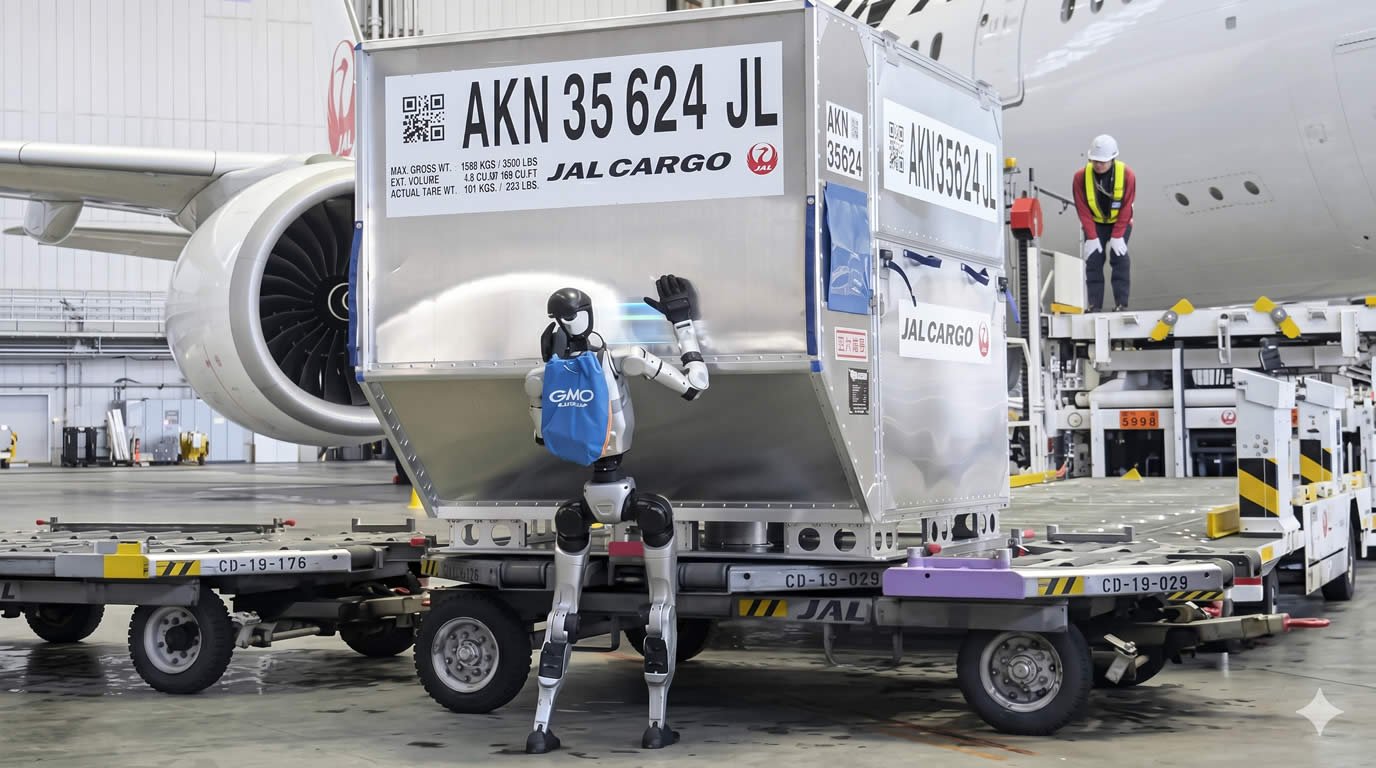
TOKYO — On May 6, 2026, Tokyo’s Haneda Airport took on a batch of new workers that look nothing like the usual ground crew. The arrivals were humanoid robots made by Hangzhou-based Unitree Robotics. For the next two years, they will be deployed to push baggage containers, move cargo and handle basic ramp tasks at one of the world’s busiest aviation hubs.
At first glance the deal looks like a straightforward commercial pilot. In reality, it captures how China’s robotics industry is moving beyond lab demos and rewriting long-held assumptions about who leads in automation.
Why a robotics powerhouse looked to China
Japan is a robotics heavyweight. Yaskawa, FANUC and other domestic names dominate industrial robots globally. By all logic, an order to automate ground handling at Haneda should have gone to a Japanese supplier. Instead, Japan Airlines turned to Unitree.
The reason is not that Japan lacks the technology. It is that practicality won.
Haneda handles well over 60 million passengers a year, and its infrastructure was built long ago. Wheeled robots or fixed automation systems — the kind Japanese manufacturers are known for — would have required extensive terminal modifications. That means high costs and years of disruption, something an airport that runs around the clock cannot afford.
There is also a more urgent factor: Japan’s acute labor shortage. The country’s ground handling workforce shrank by 2,600 people over four years. Few are willing to take jobs that involve heavy lifting, shift work and irregular hours. With tourist numbers surging, Japan Airlines simply did not have the luxury of waiting for homegrown solutions — or the staff to keep doing everything the old way.
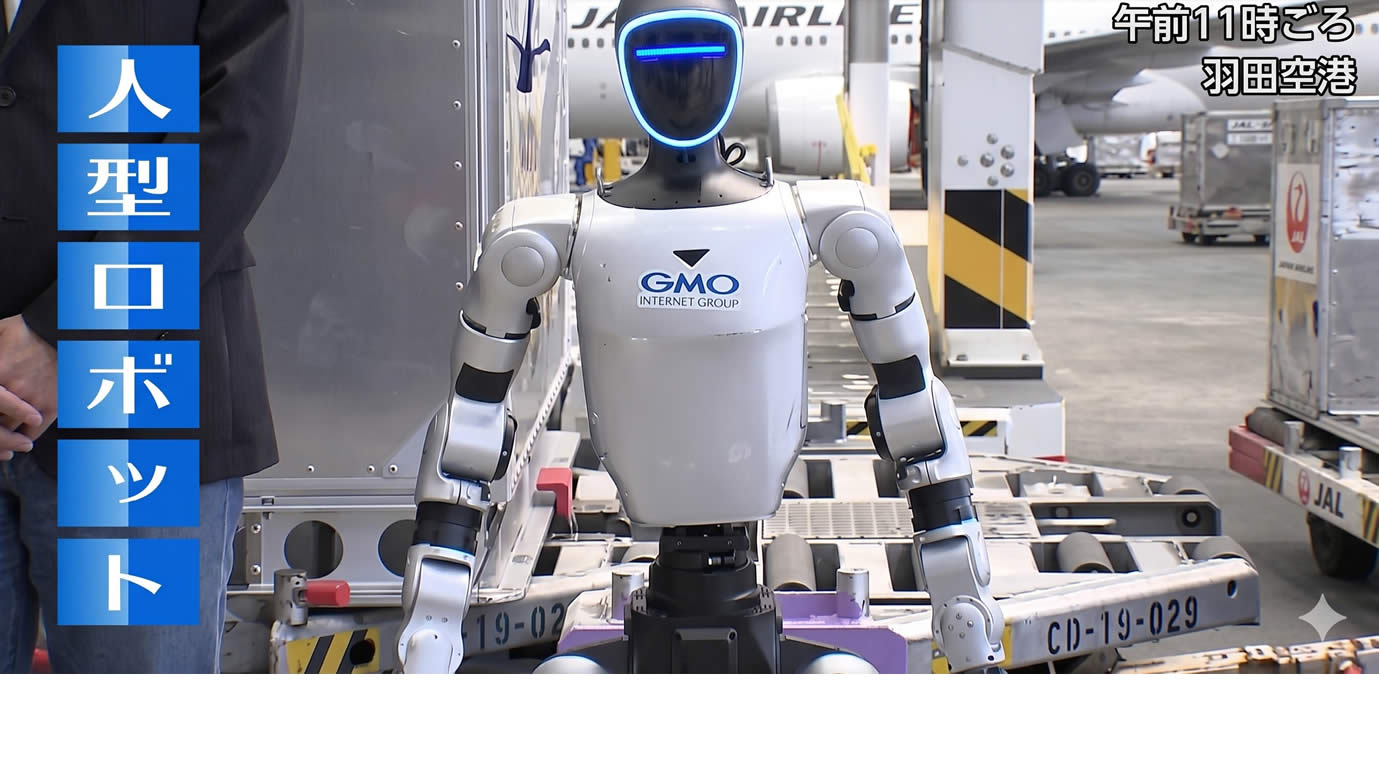
Unitree’s humanoid robot stepped right into that gap. The G1 model, about 130 centimeters tall, operates in spaces and workflows designed for humans, no infrastructure changes needed. More striking is the price: 85,000 yuan (roughly $11,700), about four months’ pay for a ground handler in Japan and far below the six-figure sums typical of Western humanoid platforms. Stable motion, real-world reliability and the fact that the robot is already being mass-produced broke the industry habit of “expensive and impressive but not actually usable.”
From lab gimmicks to working at an airport
Humanoid robotics has long been caught in a pattern. On one side, Western companies build high-end machines that rarely leave the lab. On the other, many developers chase backflips, dancing and other viral tricks while failing to deploy in any meaningful commercial setting. Unitree’s placement at Haneda stands out because it took a different route — one built on utility.
The practical edge comes from a deep technical base. Unitree started with quadruped robots, now holds more than 60 percent of that global market, and has refined motion control over years of shipping products. Its in-house M107 joint motor delivers torque density well above the industry average. Together with a control stack mixing reinforcement learning and model predictive control, the robot keeps millisecond-level dynamic balance when pushing heavy containers. Because Unitree designs and makes all its core components itself, vertical integration keeps costs down while making volume production possible.
Just as important is a tight focus on what the job actually requires. Haneda does not need robots that dance or hold conversations. It needs machines that can reliably do repetitive, physically demanding tasks. Unitree concentrated on load capacity, movement speed and stability for duties like moving luggage containers and transferring cargo — nothing more. That “less but better” approach allowed the system to fit quickly into a demanding operational environment.
Unitree has drawn attention before — performing at China’s CCTV Spring Festival Gala, helping at the Hangzhou Asian Games — but Haneda is different. It is the first time a Chinese humanoid robot has entered commercial live operations at a top-tier international airport. It marks a genuine shift from technology demonstration to deployment that solves a real customer’s problem.
Human-robot gap-filling, not human replacement
Predictably, the arrival of robots prompted concern about jobs. But the project was framed from the start as human-robot collaboration, not replacement. The units take on basic, repetitive and strenuous tasks — exactly the kind of work recruitment has struggled to fill. Complex or unpredictable situations remain in human hands.
Seen more broadly, the cooperation offers a template for aging economies. When the working-age population shrinks, humanoid robots can step into roles people increasingly avoid, keeping essential services running without requiring entirely redesigned infrastructure. The project also sends a signal about what humanoid robots should be for: solving actual operational bottlenecks, not chasing spectacle.
For a Chinese robotics company to supply Japan — a market long seen as an exporter of automation technology — marks a quieter but significant reversal. Unitree’s work at Haneda is one more piece of evidence that Chinese firms are no longer low-end manufacturers but competitors in advanced hardware and system integration.
Over the next two years, Unitree’s robots will continue trials at Haneda. Possible next steps include cabin cleaning and operating other ground support equipment. Begun in the spring of 2026, this collaboration may well become the moment the humanoid robot industry’s center of gravity started to pivot from “can it work?” to “where can we use it next?”
